
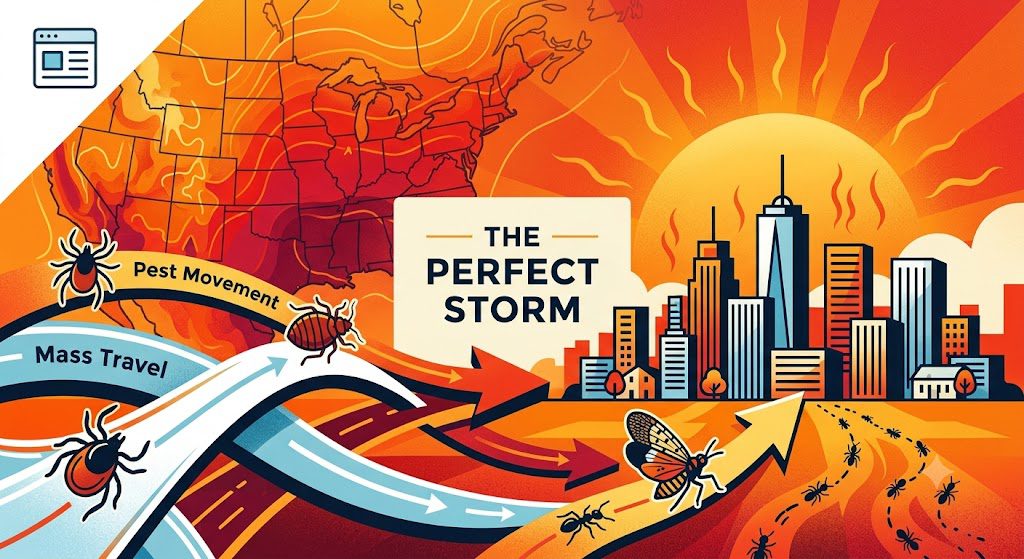
In the world of urban and structural pest defense, high-density infestations are rarely an accident. They are the mathematical result of specific environmental and human factors overlapping at the exact same time.
This summer, those factors have aligned into a perfect storm.
With global heat indexes pushing ambient temperatures well above historical baselines and mass transit networks operating at absolute peak capacity, biological vector pressure across the country has reached a high-water mark. From rapid-cycling bed bug populations to expanding tick territories and invasive agricultural threats, property owners are facing a unique convergence of pest mobility and accelerated reproduction.
To understand how to protect your home or enterprise, you first have to understand the macro drivers behind this season’s pest surge.
1. Thermal Acceleration: Why Elevated Temps Equal Explosive Growth
Insects are ectothermic, meaning their internal metabolic rates and reproductive lifecycles are dictated entirely by ambient external temperatures. When baseline temperatures rise—amplified by global climate trends like a super El Niño, which climate monitoring models at NOAA have linked to global temperature spikes exceeding standard baselines by up to 3°F—the biological clock speeds up dramatically.
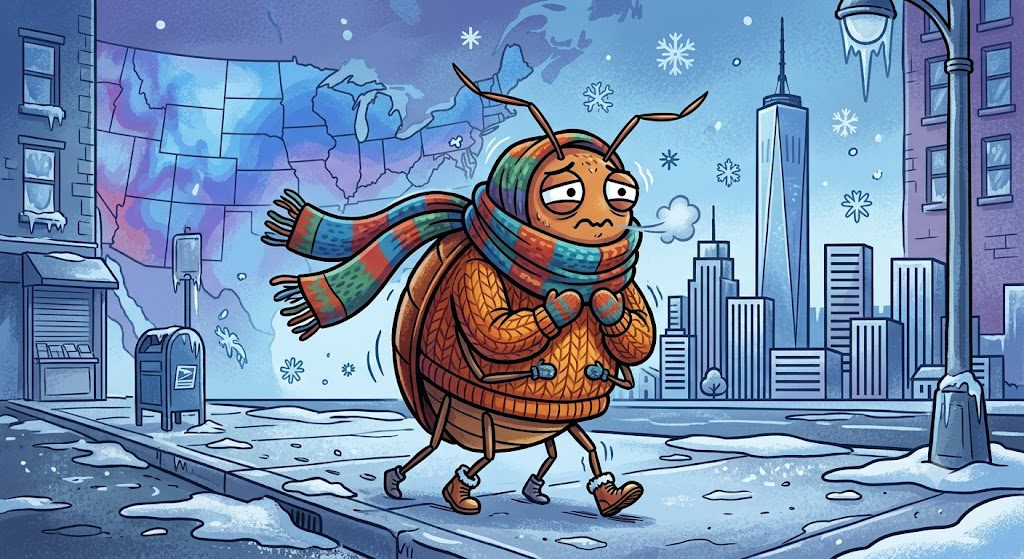
For nuisance and blood-feeding pests like bed bugs (Cimex lectularius), tropical heat is an operational accelerator:
- Shortened Egg-to-Adult Cycles: Entomological research published through the Journal of Economic Entomology demonstrates that under standard room temperatures (~70°F), a bed bug nymph takes roughly 3 to 5 weeks to mature into a breeding adult. When temperatures consistently sit in the mid-80s to 90s, that lifecycle compresses significantly.
- Increased Feeding Frequency: Higher metabolic rates demand more frequent blood meals. Pests that might otherwise feed once every seven to ten days begin seeking hosts every two to three days.
- Rapid Egg Production: Female bed bugs lay eggs faster and in higher quantities when ambient warmth signals optimal survival conditions.
When you elevate ambient temperatures across an entire region, localized pest populations don’t just grow—they multiply exponentially.
2. Mass Transit as a Vector Network
While heat drives the internal population growth of pests, human movement supplies the transport infrastructure.
Travel activity hit unprecedented levels this summer. According to official passenger volume data from the Transportation Security Administration (TSA), airport checkpoints screened a record-breaking 18.7 million passengers during the July holiday rush alone, and July 23rd marked the busiest day for commercial airlines in history.
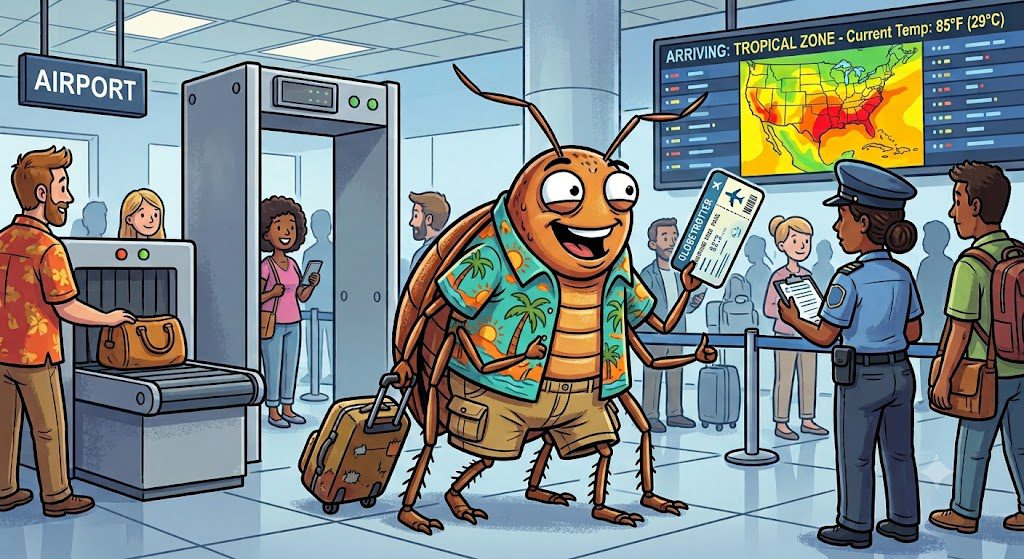
Every packed flight, hotel room, ride-share vehicle, and luggage compartment serves as a high-volume exchange node for hitchhiking pests.
[Infested Origin Node] ➔ [High-Density Transit (Plane/Bus)] ➔ [Luggage / Clothing] ➔ [Destination Perimeter]
Bed bugs do not fly or jump; they rely entirely on passive transport. When record-breaking human mobility collides with heat-accelerated pest reproduction, the rate of cross-contamination between commercial hospitality spaces and private residences skyrockets. You are no longer just dealing with local pests—you are exposed to hitchhikers picked up three states away.
3. Beyond the Bedroom: The Expanding Public Health Horizon
Bed bugs are only one layer of the broader biological picture this season. Environmental disruption, flash flooding, and shifting thermal boundaries are opening doors for several other aggressive vectors across the North American continent:
- Expanding Tick Territories: Distribution tracking by the Centers for Disease Control and Prevention (CDC) shows the Lone Star tick (Amblyomma americanum) continuing its push farther north and west, bringing with it the threat of Alpha-gal syndrome (the red meat allergy) and tick-borne pathogens.
- Invasive Agriculture Threats: The USDA Animal and Plant Health Inspection Service (APHIS) recently issued emergency response guidelines following 5 confirmed detections of New World screwworm (Cochliomyia hominivorax) in Texas livestock—a stark reminder of how quickly flesh-eating parasitic vectors can re-emerge when containment protocols break down.

- Waterborne & Flood-Driven Outbreaks: Heavy seasonal storms and localized flash flooding create stagnant water reserves, driving spikes in mosquito populations and waterborne agricultural pathogens like Cyclospora, as monitored by public health surveillance teams at the FDA.
4. Operational Defense: How to Secure Your Perimeter
Chemical-only treatments are increasingly running into resistance issues as pest strains evolve. To stop heat-accelerated, transit-borne pests from establishing a foothold in your space, you have to employ a layered mechanical and physical defense protocol.
A. The Post-Travel Containment Zone
Never bring luggage directly into carpeted bedrooms or living quarters after traveling:
- Isolate at the Door: Unpack luggage in a garage, utility room, or on hard surface floors (tile or concrete) where hitchhikers can be easily spotted.
- Thermal Destruction: Run all travel clothing—clean or dirty—through a high-heat dryer cycle for at least 30 to 45 minutes. Thermal research confirms ambient heat above 120°F kills all life stages of bed bugs, including eggs, instantly.
- Vacuum & Seal Bags: Vacuum hard-shell luggage seams and store soft bags inside sealed polyethylene storage bins.

B. Structural Hardening
Take away the entry points and harborages that pests use to transition from the outdoors inside:
- Seal Envelope Penetrations: Use silicone caulk or copper mesh to seal expansion joints, utility pipe penetrations, and door sweeps.
- Manage Exterior Moisture: Eliminate standing water within 50 feet of your structure to disrupt mosquito and tick harborage zones.
- Deploy Physical Barriers: Utilize high-grade mattress encasements and mechanical interceptor traps under bed posts to catch wandering pests before they reach a host.
Winning the War on the Ground

The macro environmental factors—the heat, the travel records, and the shifting pest ranges—aren’t going anywhere. But an explosion in regional pest activity does not have to turn into an infestation inside your walls.
By understanding the biology of the threat and enforcing strict mechanical barriers, you take away their tactical advantage. Stop waiting for pests to settle in—fortify your perimeter, audit your travel protocols, and keep your space locked down.
Defend your turf. Deploy absolute control with Defensive End! BLITZ.